
Almost everyone brushes their teeth every day.
Almost everyone thinks they’re doing it well.
And yet, tooth decay and gum disease remain among the most common health problems in the world.
That contradiction tells us something uncomfortable – brushing isn’t failing because we don’t try. It’s failing because we’re human.
We rush. We forget. We miss spots. We lose discipline over time.
For decades, electric toothbrushes have sought to make brushing easier. Now, a new idea is emerging, one that doesn’t just improve brushing motion but also improves brushing behavior.
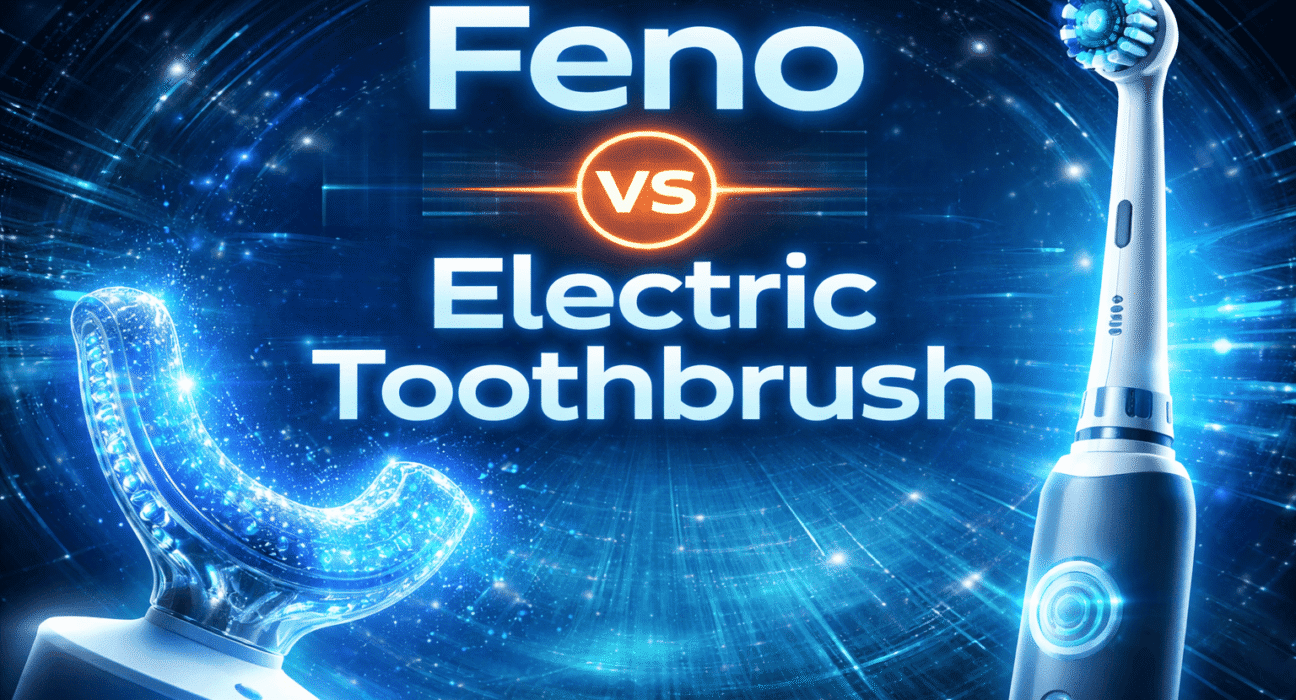
That idea lives inside the Feno Toothbrush, and it’s why the discussion around Feno Toothbrush vs traditional electric toothbrushes matters more than ever.
Why Oral Health Still Struggles Despite Better Tools?
According to the World Health Organization, over 3.5 billion people globally suffer from oral diseases, most of which are preventable.
This isn’t because people don’t own toothbrushes.
It’s because daily habits are hard to sustain, especially over the years.
Dentists consistently point to the same problems:
- Brushing for too little time
- Missing the same areas repeatedly
- Inconsistent routines
- Declining discipline over months
Even with advanced oral health devices, behavior remains the weakest link.
That’s where Smart tech Dental Care enters the picture.
Traditional Electric Toothbrushes: A Big Step, But Not the Final One
Electric toothbrushes were a meaningful upgrade.
A major review in the Cochrane Database of Systematic Reviews found that electric toothbrushes reduce plaque by about 21% and gingivitis by about 11% compared to manual toothbrushes when used consistently.
That’s real progress.
They help by:
- Automating brushing motion
- Reducing physical effort
- Encouraging longer brushing time
But they still depend heavily on one thing: the user doing everything right.
Technique. Memory. Consistency.
And that’s exactly where many people struggle.
The Real Shift: From Better Tools to Better Habits
Here’s the key difference most people miss in the AI vs electric toothbrush discussion:
Electric toothbrushes improve how you brush.
AI dental devices aim to improve how often and how consistently you brush.
That distinction matters.
Research in preventive dentistry shows that habit consistency has a stronger impact on oral health outcomes than brushing intensity alone.
This is why modern smart tech oral health solutions focus on routine support, not just hardware power.
What Makes the Feno Toothbrush a New Category?
The Feno Toothbrush is not trying to be a “stronger” electric toothbrush.
It approaches brushing as a system.
Instead of moving a brush head tooth by tooth, Feno uses a full-mouth mouthpiece design intended to clean all teeth at once, while software tracks brushing behavior over time.
This places it in a different class, an AI dental device, not simply an upgraded electric brush.
The intelligence is not about diagnosing problems. It’s about helping users:
- Stick to routines
- Reduce skipped sessions
- Minimize missed areas
- Maintain consistency long term
That’s a subtle but powerful shift.
How AI Actually Helps in Dental Care?
Let’s be clear and responsible.
AI in dental care:
❌ does not replace dentists
❌ does not diagnose disease
❌ does not perform treatments
It supports daily discipline.
AI-powered oral health devices analyze patterns such as:
- How regularly does brushing happen?
- Whether routines are skipped
- Long-term consistency trends
This is the same principle behind fitness trackers and sleep monitors, tools that don’t heal you, but help you stay consistent.
That’s the foundation of smart tech dental care.
Feno Toothbrush Comparison: Where the Differences Matter?
1. Coverage and Missed Areas
With traditional electric toothbrushes, users rely on memory to ensure complete coverage.
Over time, studies show that people repeatedly miss the same areas.
The Feno toothbrush approach reduces this risk by addressing all teeth simultaneously, lowering dependence on technique and recall.
It doesn’t promise perfection; it reduces error.
2. Time and Routine Discipline
Many people struggle to brush for two full minutes twice a day.
Behavioral science consistently shows that shorter, predictable routines are easier to maintain.
The Feno Toothbrush focuses on:
- Fixed brushing sessions
- Predictable effort
- Reduced friction
Consistency often beats intensity in preventive care.
3. Feedback Over Time, Not Just Alerts
Traditional electric toothbrushes offer real-time alerts.
AI dental devices analyze patterns over weeks and months.
This allows feedback focused on:
- Habit stability
- Routine improvement
- Long-term adherence
That’s a meaningful evolution in oral health devices.
Is There Real Evidence Behind Habit-Based Oral Care?
Yes.
Preventive dentistry research consistently shows:
- Regular plaque removal lowers gum inflammation
- Inconsistent brushing increases Gingivitis risk
- Long-term routine adherence predicts oral health outcomes
AI does not clean teeth better than physics allows. It helps people do the basics correctly more often.
That’s the realistic value of an AI dental device like the Feno toothbrush.
Who Is the Feno Toothbrush Best Suited For?
The Feno toothbrush comparison is not about replacing electric toothbrushes for everyone.
Feno is especially helpful for:
- Busy individuals
- People who rush brushing
- Tech-comfortable households
- Users who struggle with consistency
- Parents managing family routines
Traditional electric toothbrushes may remain ideal for:
- Highly disciplined brushers
- Users who prefer manual control
- Those who dislike connected devices
This is about fit, not superiority.
Cost, Value, and Real Expectations
AI-powered smart tech oral health devices often cost more upfront.
But value comes from:
- Time saved
- Reduced mental effort
- Habit reinforcement
- Long-term consistency
Preventive care is always cheaper than correction, both financially and physically.
Common Questions, Answered Simply
Q: Does AI make dental care complicated?
No. Good AI removes guesswork and simplifies routines.
Q: Can AI dental devices replace dentist visits?
No. Professional care remains essential.
Q: Is the Feno Toothbrush safe for daily use?
It is designed as a consumer oral health device. Users should always follow product guidance and dental advice.
What does this mean for the Future of Dental Care?
Healthcare is slowly shifting from fixing problems to preventing them.
We already accept this with:
- Fitness trackers
- Sleep monitoring
- Heart care tools
Dental care is now joining that ecosystem.
The Feno Toothbrush represents an early step toward habit-first, preventive smart tech dental care.
Feno Toothbrush vs Traditional Electric Toothbrushes
Traditional electric toothbrushes remain effective and clinically supported.
The Feno Toothbrush offers something different:
- Less dependence on technique
- More support for consistency
- A system built around real human behavior
AI isn’t here to replace brushing. It’s here to help people do it better, more regularly, and with less effort.
Conclusion
Most dental problems don’t start with neglect. They start with small daily lapses. AI dental devices don’t promise miracles. They promise structure and sometimes, structure is exactly what better health needs. You can read more about present and upcoming Ai Tech from our us.